Penny Slots in the UK: Stakes, Spins and RTP
 Available in GB
Each spin is a separate wager with a random result; the game’s settings determine the stake and any available controls.

- How Penny Slots Work: Spins, RTP and What You Can Control
- What Counts as a Penny Slot in the UK?
- Playing Penny Slots for Real Money: Stakes and UK Rules
- Choosing a Penny Slot Without Chasing a ‘Best’ One
- Bonus Rounds, Bonus Funds and the Fine Print
- Can You Win on Penny Slots? The Honest Answer
- Free Penny Slots: What You Can Play Without Depositing
- How to Play Penny Slots Online, Free or for Cash
- Penny Slot Games: Compare the Details, Not the Hype
- Trying New Penny Slots Without Guessing
How Penny Slots Work: Spins, RTP and What You Can Control
A slot spin is a wager followed by a result. You choose the stake the game allows, start a spin, and the reels produce a combination of symbols. Depending on the game, matching symbols may pay according to a paytable, while other combinations pay nothing. Some slots add features such as wild symbols or bonus rounds, but the basic loop stays the same: stake, spin, result.
I used to read a run of losing spins as a sign that a win was “due”. It isn’t. Each outcome is determined by a random number generator, or RNG, certified by an approved testing laboratory. The animation shows the result; it doesn’t make the result predictable. A previous spin cannot tell you what the next one will be.
What you can choose
Your main decision is how much to stake on a spin, within the options the game provides. Depending on the slot, you may also be able to select a number of paylines or adjust the coin value. Other games set those elements for you, so the total stake is presented as a single choice. Check what the controls actually change: a displayed coin value on its own may not tell you the cost of the full spin.
When choosing penny slots in the UK, payout timing is one detail worth checking alongside the games and terms. This list gives you the known payout-speed information for each operator.
Payout speed: 1-3 business days You can expect payouts to take 1–3 business days.
Payout speed: 1-3 business days You can expect payouts to take 1–3 business days.
Payout speed: 1-3 business days You can expect payouts to take 1–3 business days.
Payout speed: 1-3 business days You can expect payouts to take 1–3 business days.
Payout speed: 1-3 business days You can expect payouts to take 1–3 business days.
Payout speed: 1-3 business days You can expect payouts to take 1–3 business days.
Payout speed: 1-3 business days You can expect payouts to take 1–3 business days.
Payout speed: 1-3 business days You can expect payouts to take 1–3 business days.
Payout speed: 1-3 business days You can expect payouts to take 1–3 business days.
Payout speed: 1-3 business days You can expect payouts to take 1–3 business days.
You can also decide whether a game’s mechanics suit you. A busy layout with several features may take more attention to follow than a simple reel setup. The paytable and help screen explain what symbols do and how a feature is triggered. I have skipped that screen before, then wondered why a result paid less than I expected. My mistake, not a trick.
You control when to begin a spin and when to stop playing. That is different from controlling what appears. Changing the stake, choosing a line setting or waiting between spins can shape how you play, but none of those choices can steer the RNG towards a particular symbol.
What RTP tells you
Return to Player (RTP) is the share of all wagered money that a slot is designed to return across its lifetime. It is a long-run measure, not a promise about what will happen during your own session. A short stretch can look very different from that percentage; one player’s results do not have to match it.
The game developer sets the RTP, and it does not change just because you alter the stake. So a smaller stake can make each loss smaller, but it does not improve the slot’s underlying house edge. I once treated tiny spins as if they made a game more favourable. They only changed the size of each wager.

RTP is useful for understanding the game’s stated long-run return, but it does not tell you when a win will land, how much a particular spin will pay, or whether you will finish ahead. Nor does a high-looking figure make a slot predictable. The outcome of an individual spin remains random.
A few grounded habits
Before playing, I now take a moment to check the paytable, the stake controls and the game’s RTP information. That stops me mistaking a line setting for the whole cost or a feature animation for a guaranteed payout. If I cannot tell what a control does, I leave it alone until I understand it.
I also set my own boundary before getting absorbed in the reels. A slot can keep offering another spin, but that does not mean there is a reason to continue. No system of timing, pattern-spotting or stake changes can turn random outcomes into a forecast. Keep the distinction clear: you choose how you play; the game determines the result.
What Counts as a Penny Slot in the UK?
The name can be misleading. A penny slot does not necessarily mean you can play a whole spin for one penny. The useful detail is the game’s minimum total spin cost, not the smallest coin value shown on its screen.
One practical definition used in a specialist review is a slot with a minimum spin costing 20p or less. Treat that as a working description, rather than a promise that every game labelled “penny” has the same minimum. The label is informal; the cost depends on how the game’s stake options are set up.
A practical definition of a penny slot in the UK is often a game with a minimum total spin cost of 20p or less.
Paylines make the difference easy to see. If a slot has 20 paylines and you stake 1p on each line, the total is 20p for one spin. The 1p figure is the line stake, not the price of the entire spin. I’ve made that mistake myself: spotting “1p” and assuming it meant the whole game would cost a penny each time. It didn’t.
So when you see penny slots in the UK, check what the displayed amount refers to. Is it the stake per line, a coin value, or the total cost of a spin? If the game lets you change the number of active lines or the stake on each one, those choices can change the total. A small number on the screen is not enough to tell you what a spin costs.
A sensible test is straightforward: find the minimum total stake for one spin, with the game set to its lowest available options. If that total is 20p or less, it fits the practical definition above. If only a per-line amount is visible, do the multiplication before treating it as a penny slot.
That’s the distinction: “penny” describes a low minimum spin cost, not necessarily a one-penny spin. Check the total.
Playing Penny Slots for Real Money: Stakes and UK Rules
With real-money penny slots, every spin comes out of your cash balance. That sounds obvious, but it changes how I look at the stake button: a small figure beside a spin is still a real cost, repeated whenever you choose to play. Before wagering, I check what the game will deduct for the selected spin and what limits apply to me. The word “penny” is not a separate set of rules.
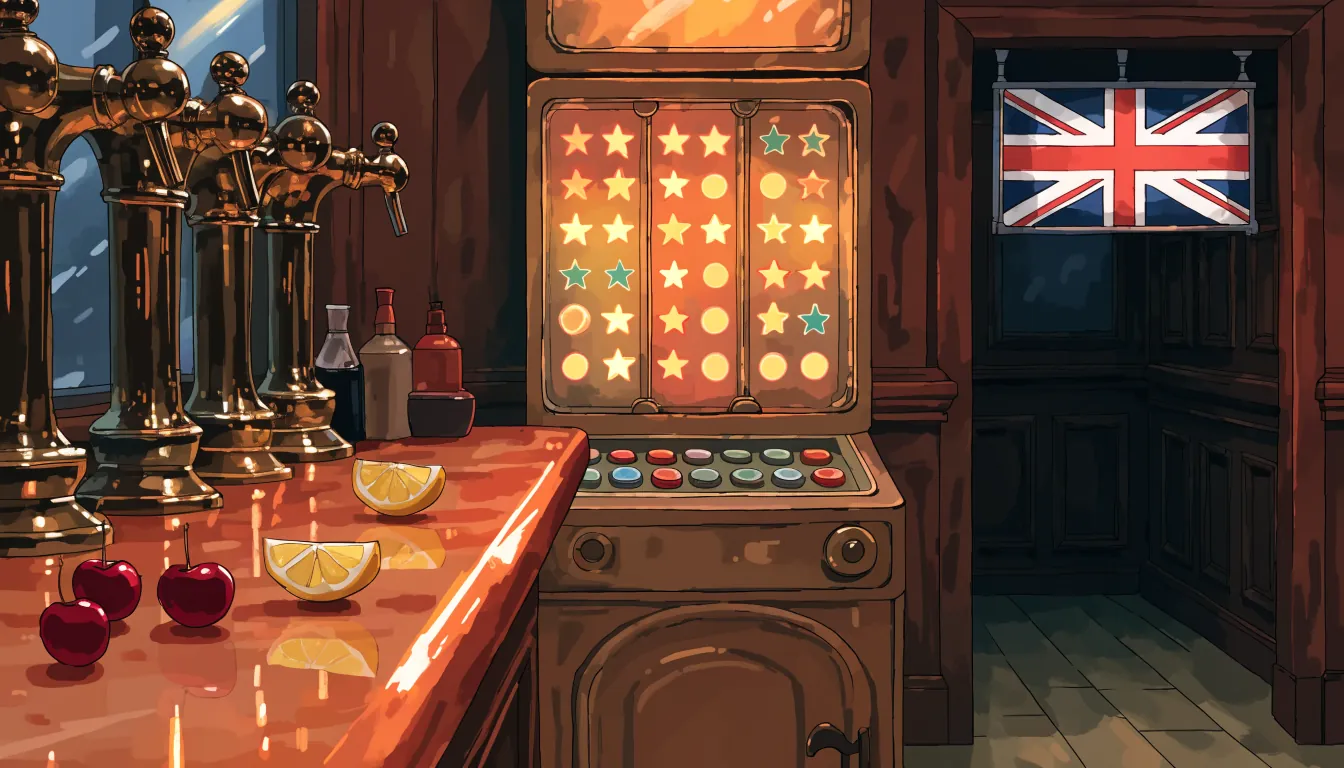
UK rules set an age-based ceiling for online slots. For a player aged 25 or over, the maximum stake is £5 per game cycle. For someone aged 18 to 24, it is £2 per game cycle. There is also a £2 maximum stake per online slot spin in the UK. These limits are ceilings, not suggested amounts, and they do not mean you have to stake the maximum.
That distinction matters. A game cycle limit and a per-spin limit are not a reason to treat a penny slot as if it were a higher-stakes game. The amount you choose for a spin can remain low; the legal caps define the upper boundary. I would not assume that every title offers the same stake choices, either. What you can select depends on the game’s available settings, so read the displayed stake before pressing spin.
There is no minimum stake set by statute for online slots in the UK. In practice, the game still needs to offer a playable stake, and the lowest option may differ from one title to another. So, if you are looking for a genuinely small cash stake, check the actual minimum shown for that game rather than relying on its label. A penny slot name alone cannot tell you what your chosen spin will cost.
Depositing means real money is at risk
When you fund an account and wager, the balance is not practice credit. A losing spin reduces it; a winning spin may add to it, but there is no promise that it will. I used to focus on the small cost of one turn and ignore how quickly repeated turns made the total feel different. That was a poor way to keep track.
Risk of Loss
Every spin comes out of your cash balance, and a losing spin reduces it. Small stakes do not remove the possibility of losing the money you put in.
I now think about the amount I am prepared to spend before I start, not the stake that looks harmless on screen. If the game’s lowest selectable amount is already more than I want to risk, I leave it alone. If I do play, I keep the selected stake visible and avoid raising it just because the last few turns went badly. A run of losses does not make a larger stake more sensible.
This is also where the age-based rules matter in a practical way. A player aged 18 to 24 has a lower game-cycle ceiling than an older adult. The £5 cap does not apply to everyone, and neither ceiling is a target. I would treat both as a hard stop above which a game should not let the relevant player wager, not as a guide to what a session ought to cost.
For cash play, the useful checks are plain: confirm the game’s minimum and maximum stake, make sure the selected amount is the one you intended, and keep an eye on the balance as you play. That is less exciting than a flashing offer, but it is what stops a small-looking stake from becoming an unplanned spend.
I am not going to dress that up as a clever system. Small stakes can make each individual spin cheaper; they do not remove the possibility of losing the money you put in. The UK limits set the legal maximums, while the amount you choose below them is still your decision. Keep the difference clear. Small is still real.
Choosing a Penny Slot Without Chasing a ‘Best’ One
“Best” sounds like a useful shortcut. In practice, it can mean a game with a high displayed Return to Player (RTP), a low minimum stake, lots of features, or simply a title someone is trying to sell you. Those are different things. I would not trust a ranking that never says what it is ranking.

Start with the details shown for the game. A specialist review reports that UK-licensed operators display each game’s minimum stake, maximum stake and RTP in the lobby. Check those figures rather than relying on a “penny” label or a promotional description. The minimum tells you whether the game fits the amount you intend to risk on a spin; the maximum shows how far the stake can be raised. If either figure is unclear, I would leave the game alone until I could verify it.
RTP can help with comparison, but it is not a forecast for your next session. It describes the share of wagered money a game returns across its lifetime, not what it will return to you personally. A higher displayed RTP may look attractive beside a lower one, but it does not promise a win, a steady run, or a particular result before you stop playing. I used to treat the biggest percentage on a screen like a tip. It wasn’t.
Nor does lowering your stake improve the game’s house edge. The edge is the same at penny stakes as at higher stakes, and the game’s RTP does not change just because you wager less. A smaller stake can limit how quickly money is put at risk, which matters for setting a boundary; it does not make the underlying deal more favourable. Small stakes, same edge.
- Decide what you can afford to lose before starting
- Use deposit limits and time-outs
- Treat the budget as the cost of playing
- Increase stakes after a losing run
- Chase a target to “get even”
- Rely on a strategy to change random outcomes
That distinction matters if you are looking for a penny slot strategy. There is no stake setting that changes random outcomes or turns a game into a reliable way to make money. I find it more useful to decide what I can afford to lose before I start, then treat that amount as the cost of playing—not as a target I need to win back. If I catch myself increasing stakes after a losing run, that is my cue to stop, not to “get even”.
Use the account controls as part of that plan. Operators must offer deposit limits, time-outs and reality checks. Set a deposit limit that fits your own budget, and pay attention when a reality check interrupts a session. A time-out is there for moments when stopping feels harder than it should. UKGC-licensed operators must also assess whether a customer’s gambling is sustainable in light of income and spending patterns; that is a safeguard, not a reason to stretch your personal limit.
A penny slot with a low minimum may be easier to fit within a small budget, but that alone does not make it the right choice. Compare the displayed stake range and RTP, decide your stopping point in advance, and ignore claims about “big wins” unless you are comfortable with the chance of losing what you stake. I’d rather leave a game that does not fit my limit than keep searching for a magic pick.
Bonus Rounds, Bonus Funds and the Fine Print
A slot’s bonus round and a casino bonus are two different things, despite the shared word. I used to read “bonus” and assume it meant extra money had appeared in my account. Often, it meant the game had moved into a feature instead.

An in-game bonus round is part of the slot itself. It might be triggered during play and give you a different screen, a feature to interact with, or a chance to collect prizes under the game’s rules. Any award from it is a game outcome, not automatically a promotional credit. The game information should explain what triggers the feature and how its prizes work. “Bonus round” sounds generous; it is still part of the game.
A casino promotion is attached to your account or an offer, rather than being a feature built into one slot. It may provide bonus funds subject to conditions. Those funds are not necessarily withdrawable cash: the terms can require you to wager them before you can withdraw any resulting balance. The exact rules depend on the offer, so I would read them before accepting rather than treating the headline as the whole deal.
What wagering requirements mean
A wagering requirement tells you how much qualifying play is required against bonus funds before withdrawal. The multiplier matters because it changes the amount of turnover involved. A large-looking offer can come with conditions that make it much less useful than it first appears.
A specialist review reports that, for bonus funds at UKGC-licensed operators, the wagering requirement is limited to ten times the bonus amount. Treat that as a specific reported limit, not as a promise that every offer is attractive or has identical terms. Read the operator’s own conditions too, including which games count and whether other restrictions apply.
Attention A casino promotion with bonus funds is separate from an in-game bonus round; promotional funds often come with wagering requirements before withdrawal is permitted.
That distinction matters when a slot has its own bonus feature. Landing a game-triggered prize does not, by itself, mean you have accepted a casino promotion or have a separate wagering condition attached. Conversely, accepting promotional funds may bring terms that apply to the funds even while you play a slot with an entertaining bonus round. Keep the two sets of rules separate.
Read before you opt in
I now look for the conditions before pressing an offer button. Check whether the promotion is optional, what balance it applies to, and what has to happen before a withdrawal is permitted. If the terms are unclear, do not assume the most favourable interpretation. “Free” can describe the way an offer is presented, not the absence of conditions.
For a penny slot, the small stake does not make promotional wording simpler. A bonus round belongs to the game; bonus funds belong to an account offer. One is a feature you encounter while playing, the other comes with terms you should understand before accepting. Easy to mix up.
Can You Win on Penny Slots? The Honest Answer
Yes, a win is possible on penny slots. So is a run where nothing meaningful comes back. The awkward part is that neither a small stake nor a promising-looking game tells you what will happen in your next session.
I used to treat a published Return to Player (RTP) figure as if it were a forecast: play for a while, and the slot should return something close to that percentage. That is not what it means. RTP describes the share of money wagered that a game is designed to return across its lifetime, not a promise about one person’s results or a single visit. Your session can land well above or below that long-run figure. It can end quickly, too.

Each result is generated at random by a random number generator (RNG) that has been certified by an approved testing laboratory. That does not mean every result is due to even things out for you. A quiet spell does not make a win “due”, and a recent payout does not tell you what the next spin will do. I have made both arguments to myself when I wanted to keep going. They were excuses, not useful information.
What a win actually tells you
A payout is not automatically a profit. You need to consider what you staked to get it, and whether the amount returned leaves you ahead overall. A modest prize can feel like a win in the moment while still leaving your balance lower than when you started. That distinction matters more than the flash or sound around the result.
How much can you win on a penny slot? There is no single answer that applies to every game. The payout depends on the game and the result; a jackpot may be available on some slots, but its presence does not make it predictable or guaranteed. The word “jackpot” can do a lot of marketing work. It does not tell you your chances of hitting one.
The RTP is set by the game developer and does not change just because you stake less. Playing penny stakes may keep each individual wager smaller, but it does not turn the game into a better-value bet or make a win more likely. I had to stop confusing “less money at risk per spin” with “better odds”. They are different things.
Honest Limit
No session is owed a win, and long-term RTP cannot predict your individual result.
If you are looking at penny casino slots in the UK hoping to find a sure route to a payout, there isn’t one. A game can return money, but its long-term RTP cannot predict your result, and no session is owed a win. I find it more useful to decide what I am comfortable losing before I start than to build a plan around a possible jackpot.
That’s the honest limit.
Free Penny Slots: What You Can Play Without Depositing
Free play lets you try a penny slot without putting your own money into the game. Instead of wagering cash, you use the play mode’s on-screen credits. Any balance shown there is for the game session; it is not money you can withdraw. That makes free play useful for getting a feel for a slot, but it is not a way to test what a real-money session will earn.
I’ve used free mode to see whether a game’s presentation works for me before deciding whether I want to spend more time with it. You can look at how its features appear, whether the controls make sense and whether the pace suits you. It is also a chance to notice details you might miss when you are focused on a cash balance. No pressure from a stake. A useful distinction.
“Free” can describe different ways of accessing a game, so don’t assume that every free penny slot is available without registration or a download. Access depends on how the game is offered. A browser-based version may not require a download, for instance, but that alone does not tell you whether an account is needed. Check the conditions shown where you open it rather than treating “no download” or “no registration” as a promise that applies everywhere.

Free play can also give a misleading impression if you treat it as a rehearsal for real-money play. It may let you explore the same-looking screens, but a run of play with no cash at stake cannot show what your own paid session would do. A long stretch of favourable results is not a forecast; nor is an unhelpful run proof that the game will behave differently when you pay. I’ve made the mistake of reading too much into a short trial. It tells you about the experience, not your prospects.
If you want to check a game’s Return to Player (RTP), look for the information made available with the game. UK Gambling Commission rules require operators to make RTP information available to players. Treat that figure as background about the game, not as a promise about free credits or a personal session.
For me, the sensible use of free penny slots in the UK is simple: explore the interface, decide whether you enjoy the style, and stop there if the game does not appeal. Free play removes the cash stake from that trial, but it does not turn play into a reliable test of future results. A preview, not a prediction.
How to Play Penny Slots Online, Free or for Cash
Find the game and check its details
When I want to play penny slots online in the UK, I start with the game lobby rather than an advert promising a jackpot. Search or browse the slot category, open a game’s information panel, and check the minimum stake, maximum stake and Return to Player (RTP). A specialist gambling review describes UK-licensed operators as displaying these details for each game; UKGC rules also require operators to make RTP information available to players.
The minimum stake tells you whether the game fits what you mean by a penny slot. Check how the game calculates a spin’s total cost, too: the amount selected per line may not be the full stake if several lines are active. I’ve made that mistake before. A small number on the button can look reassuring until you see the total.
RTP is useful context, not a forecast for the session you are about to play. It describes a game’s long-term return, not what you will get back from a short run. If a game shows several RTP versions, make sure you are looking at the information for the version actually offered. Then decide whether you want to try the mechanics or stake real money.
Choose free play or cash play
If you want to learn the controls, choose a free-play option where one is available. You can try the spin button, see how features appear and get a feel for the layout without putting your own money at risk. That can make a game easier to understand, but it does not turn practice results into a promise about real-money play. Free play is for getting familiar with the game.
For real-money play, use a UK-licensed operator. Online gambling is legal in the UK at licensed sites, and remote operators serving Great Britain must hold the relevant Gambling Commission licence. Before you can gamble, the operator must obtain information to establish your identity. So, if you are new to a site, expect account checks before you can start wagering.

Once signed in, open the game and look again at the selected stake before spinning. I prefer to pause here instead of tapping through on autopilot. Check the total cost displayed by the game, not just a coin or line value, and make sure the stake is one you deliberately chose. The same check is worth doing after changing settings: a different selection can alter the cost of a spin.
On a phone, take a moment to find the account controls before you start. UK-licensed operators must make deposit limits, session timers and self-exclusion options available on mobile with the same functionality as on desktop. I find it easier to locate them before a session than to hunt through menus once I’m already playing.
Keep the session simple
A tidy route is enough: find a game, read its details, choose free or cash play, then confirm the stake in the game itself. You don’t need to chase a special feature or a jackpot just because the lobby tile makes it look like the main event. Penny slot payouts and jackpot features depend on the game; check its own information rather than assuming every slot works alike.
If you are playing for cash, decide what you are comfortable spending before you open the game and use the operator’s limit tools if they help you stick to that decision. A timer can also make it easier to notice how long you have been playing. I’ve learned that “just one more spin” is a poor way to keep track. It isn’t a plan.
- Confirm the stake in the game itself before spinning
- Use operator limit tools to stick to your budget
- Distinguish between free-play and real-money modes
- Stop playing once you reach your pre-set boundary
Free and real-money modes may look similar on screen, but only one puts your money at stake. Keep that distinction clear, check the game’s displayed information, and stop if the session is no longer within the boundaries you set.
Penny Slot Games: Compare the Details, Not the Hype
A game’s name, artwork and “big win” language tell you very little about whether it suits your budget. When I compare penny slot games online in the UK, I start with the information attached to the game itself: its Return to Player (RTP) and the stake range. Then I ignore the sales pitch for a minute.
UKGC rules require operators to make RTP information available to players. A specialist review also describes lobby entries showing a game’s minimum and maximum stake alongside its RTP. Check the details shown for the version you are looking at rather than relying on a figure quoted elsewhere; game information can be easy to misread when titles or versions look similar.

RTP is useful for comparing published game information, but it is not a promise about what will happen while you play. A higher figure does not mean a particular session will pay more, and a lower minimum stake does not make a game’s RTP better. Those details answer different questions: one describes the game’s long-run return, while the other tells you what stake range is available.
I learned not to pick a slot because its thumbnail looked generous. That was mostly decoration. Now I check whether the minimum stake actually fits what I intend to spend, then read the RTP shown with the game. If either detail is missing or unclear, I move on instead of filling the gap with a guess.
“Best” is a slippery label here. Without checking comparable information, a list of supposed best penny slot games in the UK is just a ranking with a confident tone. Compare like with like: the published RTP, the available stakes and whether the game fits your own limit. Free play can help you see how a game behaves, but it does not establish that its real-money version will return a particular amount.

No magic pick.
Trying New Penny Slots Without Guessing
A new release can look tempting because the artwork is fresh and the lobby gives it a prominent spot. I’ve learned not to treat “new” as a clue about the return. It tells you when a game arrived, not whether it is more generous or a better fit for a small stake.
Before opening an unfamiliar penny slot, look at its game information. Check the minimum and maximum stake, then find the stated Return to Player (RTP). If those details are not clear, I’d rather pause than guess from the title, graphics or promotional blurb. The UK Gambling Commission requires RTP information to be made available to players, so look for it in the game or its accompanying information.
RTP is set by the game developer. Changing your stake does not change that figure, and a new release does not come with better returns simply because it has just appeared. The percentage describes the game’s theoretical return over extended play; it is not a forecast for your next session. Fresh paint, same uncertainty.
I also check whether the displayed stake range actually suits what I want to spend. A game may be called a penny slot without every available way of playing it costing a penny. The smallest selectable stake is more useful than the label. If the details show several stake settings, don’t assume the lowest one is selected by default.
When the information is easy to find, compare it with what you already know you’re comfortable staking. When it isn’t, skipping the game is a perfectly sensible choice. I used to click first and investigate later; that made the game feel like a mystery, but not in a useful way.
New penny slots in the UK are worth exploring if you enjoy trying unfamiliar features. Just separate novelty from evidence: inspect the published details, decide whether the stake range suits you, and leave claims about “hot” or “next big” games where they belong—in the marketing.
What is the maximum I can stake on Amatic slots under UK rules?
For online slots in the UK, the maximum stake is £2 per spin. The separate game-cycle limit is £5 for players aged 25 or over and £2 for those aged 18 to 24.
What is the maximum stake allowed on online slots in the UK?
The maximum is £2 per spin. The game-cycle limit is £5 for players aged 25 or over and £2 for players aged 18 to 24.
What is the minimum stake on a penny slot?
There is no statutory minimum stake for online slots in the UK. A practical definition of a penny slot is a game whose minimum total spin cost is 20p or less.
Do penny slots have worse odds than high-stakes slots?
No. The house edge is the same at penny stakes as at higher stakes, and changing your stake does not change the game’s RTP.
Are penny slots rigged?
Slot outcomes are determined by a random number generator certified by an approved testing laboratory. Past spins and stake changes cannot predict or steer the next result.
Which payment method is fastest for withdrawing penny-slot winnings?
E-wallets are generally the fastest option: withdrawals are commonly processed within 24 hours of approval, with the funds arriving almost immediately afterward.
Prepared by the Unlimluck editorial staff.