Hi-Lo Casino UK: How the Games Work
 Available in GB
The rules, deck setup and payout choices differ across online, reel-based and live Hi-Lo games, changing how each version feels.

- The Hi-Lo Basics: What Counts as Higher or Lower?
- How to Play Hi-Lo Without Chasing Every Card
- Online Hi-Lo: One Deck, a Growing Pot, and a Hard Reset
- Hilo and Draw Hi-Lo: Why the Deck Changes the Feel
- The Reel-Based Hi-Lo Game: Parlay or Take the Win
- Live Hi-Lo: The Reference Card, the Burned Cards, and the Shuffler
- Live Hi-Lo Strategy: Compare the Payouts, Then Check the Shoe
- Choosing an Online Hi-Lo Casino: Look Past the “Best” Label
- Hi-Lo Casino Sites in the UK: Check the Licence Before You Deposit
The Hi-Lo Basics: What Counts as Higher or Lower?
Hi-Lo comes down to a comparison: you see a card, then choose whether the next one will rank higher or lower. The card already on display is your reference point. The next card is judged against it, not against the card before that or the overall run of cards.
That sounds almost too simple. I used to treat it as a quick intuition game: glance at the card, pick a direction, move on. The part that catches people out is that “higher or lower” does not always mean the same thing as “win or lose” in every version. The game’s rules decide how the comparison works, and a tie can be the awkward result sitting between the two choices.
On a Higher bet, you are calling for the next card to outrank the reference card. On a Lower bet, you are calling for it to rank below. If it goes the other way, the prediction is wrong. If both cards have the same value, a Higher or Lower bet can lose as well. A tie is not automatically a neutral result.
When choosing a hi-lo casino in the UK for 2026, payout timing is one practical detail to check. Use this list as a quick reference for the stated withdrawal speed of each operator.
Payout speed: 1-3 business days Britsino lists a payout speed of 1–3 business days, giving you a stated timeframe to consider.
Payout speed: 1-3 business days Chanze lists payouts at 1–3 business days. You can use that stated timing as one factor in your choice.
Payout speed: 1-3 business days Jetsetspins gives a payout speed of 1–3 business days, a clear detail for you to bear in mind.
Payout speed: 1-3 business days BeOnBet lists a payout timeframe of 1–3 business days. This gives you a stated expectation for payouts.
Payout speed: 1-3 business days Zombillion’s listed payout speed is 1–3 business days, which you can factor into your consideration.
Payout speed: 1-3 business days EvoSpin states a payout speed of 1–3 business days, providing you with a specific timing detail.
Payout speed: 1-3 business days x3bet lists payouts at 1–3 business days. You have that stated timeframe to consider when reviewing the operator.
Payout speed: 1-3 business days Dieselwin gives a listed payout speed of 1–3 business days, a practical detail for you to note.
Payout speed: 1-3 business days SpinFormula lists a payout timeframe of 1–3 business days. You can take this stated timing into account.
Payout speed: 1-3 business days WinBeast states that payouts take 1–3 business days, giving you a clear timeframe to consider.
That last detail matters because it is easy to hear the two choices as covering every possible outcome. They do not necessarily do so. Higher and Lower describe opposite directions; neither one means “anything other than the direction I chose.” If the next card matches the reference value, the bet can still be settled as a loss. Check that rule before you treat a matching card as a harmless push.
Some versions offer a separate choice for the same value. Where that option exists, it is distinct from calling Higher or Lower: you are predicting a match rather than a move in either direction. Do not assume it is available just because another Hi-Lo game offers it. The menu of bets and the way a tie is settled belong to the particular game.
The comparison also depends on how that game orders its cards. “Higher” is not a universal description of a card until the game has set its ranking rules. So before placing a bet, identify the card being used as the reference, find out how card values are ordered, and confirm what happens if the next card matches it. Those are the basic terms of the decision, not fine print to skim after you have started.
I find it helps to keep the choice literal. You are not predicting that the game will stay on a winning streak, or that a card is “due” to appear. You are making a call about one next card relative to one reference card. A run of earlier results does not change what Higher and Lower mean, and it does not turn a tie into a win.

Small choice. Real distinction. A matching value may look like neither higher nor lower, but the rules can still make it a losing result for both directional bets. That is the basic Hi-Lo decision: compare the next card with the one in front of you, while knowing exactly how the game treats a match.
How to Play Hi-Lo Without Chasing Every Card
Start with the card the game gives you. It is random, so there is no point trying to read a pattern into that first draw. Your job is to decide what to do with the next one.
When the choice is clear to you, make your prediction: higher or lower. When it is not obvious, pause rather than clicking just to keep the round moving. You are still making a guess, not uncovering a sure thing. I’ve found that treating every card as a prompt to bet is an easy way to lose track of why I started playing.
After your first decision, keep checking in with yourself. Do you still want to make another prediction, or would you rather take what you have collected so far? You can quit at any point after that first decision and collect the winnings accumulated in the game. You do not have to keep going until a guess goes wrong.
- Look at the current card
- Make one considered choice
- Set a stopping point
- Click just to keep the round moving
- Treat every card as a prompt to bet
- Let a lucky streak make bets feel automatic
A simple routine helps: look at the current card, make one considered choice, then decide again whether to continue. Set your stopping point before the run gets exciting, and stick to it. That is not a way to control the cards; it is a way to stop one lucky streak from making the next bet feel automatic.
No need to chase.
Online Hi-Lo: One Deck, a Growing Pot, and a Hard Reset
In this online version, the card on screen is the reference point for your next call. You choose whether the next card will rank higher or lower, then the game reveals it. The values run from ace at the low end, worth one point, through to king at the high end, worth thirteen. Suits do not change that order.
The pot is what makes a run feel different from a sequence of separate guesses. When you call correctly, the winnings are added to the pot, giving you more at stake as the game continues. But a miss is not just a lost step: the money placed on that guess is lost, and all winnings collected in that game are void. Hard reset. A growing total can look reassuring right up until the next card lands.
That is the part I would keep in view before getting drawn into the rhythm of repeated guesses. The display may make the pot feel like money already secured, but it remains attached to the run. You are deciding whether to continue with an accumulated amount exposed to another outcome, not simply whether to take one more isolated chance. The screen’s rising figure can nudge you into treating it as yours. It isn’t locked in.

There is also a practical difference between a deck that replenishes and one that does not. In the single-deck description of this game, the pack has fifty-two cards, and a card stays out once it has been dealt. The sequence therefore unfolds from a shrinking set: cards already shown cannot appear again during that game. That can affect what remains possible, though it does not turn a guess into a certainty.
There is a genuine disagreement in descriptions of the online game’s deck. One account gives a single fifty-two-card deck with used cards kept out; another describes six forty-eight-card decks with continuous shuffling. Those are different setups, not two ways of saying the same thing. So I would not assume that every online Hi-Lo game follows the one-deck arrangement. Check the rules shown for the particular game before treating its previous cards as removed from the possibilities.
That check matters because the deck description changes how you read the run. With cards removed, the history on screen tells you something about which cards remain in that pack. With continuous shuffling, that reasoning does not carry across in the same way. The central choice still looks familiar, but the pool behind it may not be.
I find the pot mechanic easier to understand when I separate two things: what the game has added to the running total, and what I would actually keep if I stopped. A correct call grows the first; a wrong one wipes out the winnings from that game. Don’t confuse progress with a guaranteed payout.
Attention A growing pot is not locked in; a single wrong guess wipes out all winnings collected in that game.
Hilo and Draw Hi-Lo: Why the Deck Changes the Feel
Draw Hi-Lo has a small but important difference from versions where cards can be recycled: it uses one standard 52-card deck, and a card stays out once it has been dealt. Aces are always low. That gives the game a finite supply of cards, so the run can change as it goes on.
At the start, you have no dealt-card history to work with. Later, the cards already seen become part of the picture. If several low cards have appeared, for instance, those exact cards cannot turn up again in the same game. The remaining deck is different from the one you began with.
That does not make the next card certain. You still make a prediction, not a guarantee. But the history matters more than it would in a version that puts used cards back: each deal changes what remains available. I used to treat every choice as if the deck had reset between guesses. It had not. Small distinction. Big feel.
Aces being low also keeps the ranking clear. An ace sits below the other card values; it is not a high card you can reinterpret when that suits your guess. That matters when you are looking at the sequence and deciding what the remaining cards might mean.
For anyone comparing a Hilo casino game with a recycled-card format, this is the detail I would check first. In Draw Hi-Lo, the same card cannot appear twice in a single game, because dealt cards do not go back into the deck. So the game’s changing feel comes from the shrinking set of possibilities, not from a new deck appearing after each decision.
I find that makes each dealt card feel like it has a memory. Not magic, just fewer cards left.
The Reel-Based Hi-Lo Game: Parlay or Take the Win
This version of Hi-Lo does not ask you to follow a run of playing cards. You choose whether a reel will stop higher or lower, then the result is decided by the number it lands on. That changes the feel of the game: the decision is still a comparison, but the action is tied to a reel rather than a drawn card.
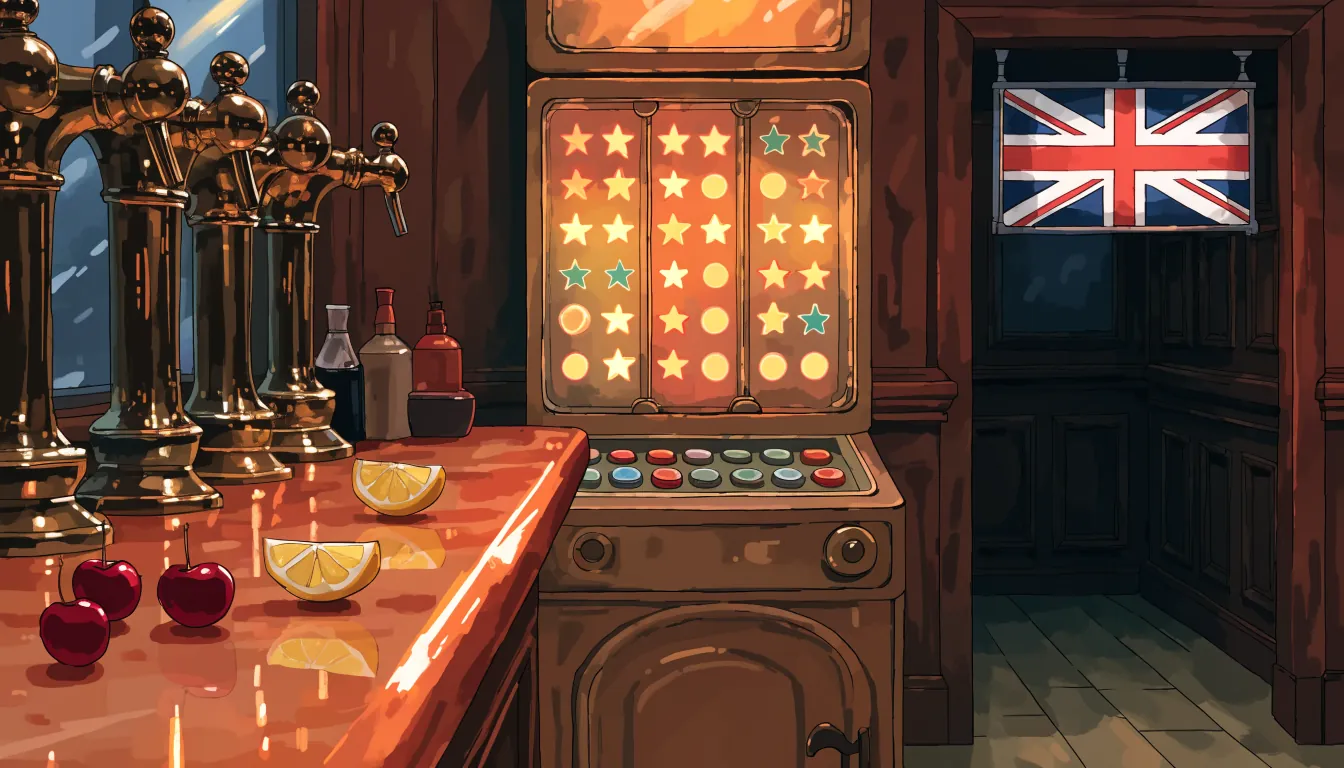
A specialist review describes the rules this way: choose Higher or Lower, and win if the reel stops on a number in that direction. A stop in the opposite direction loses, and landing on the same value is also a loss. That tie rule matters. I would not treat “close enough” as a result in your favour; the reel has to stop strictly above or below the reference value you are comparing against.
The other decision comes after a win. The described version lets you either collect or parlay: collecting takes the win and ends that run, while a parlay carries the original stake and the winnings into another attempt. It is a choice between securing what is already there and putting it back at risk for the chance to extend the run. There is no magic in the word “parlay”—it does not make the next stop more likely to go your way.
A specialist review is the basis for this particular reel description, so I would check the rules shown with the game before playing. Reel layouts and pay rules should not be assumed to match every game that uses the Hi-Lo name. In particular, confirm what counts as the comparison point and how a tie is handled. If those details are unclear, I would leave it alone rather than guess at the rules while money is in play.
The collect button is the point where I’d pause. Decide beforehand whether you are comfortable risking the current win again; otherwise, a winning run can turn into a string of decisions made only because the game offers another go. Collecting does not mean you have beaten the game, and continuing does not mean you are due a better result. It simply sets whether you keep the current winnings or expose them to another reel stop.
That is the whole appeal and the catch: one simple direction call, followed by a choice about whether to press on. Keep those two decisions separate. First judge the reel; only after a win decide whether another turn is worth the risk.

Live Hi-Lo: The Reference Card, the Burned Cards, and the Shuffler
Live Hi-Lo can look like a simple card reveal, but the order of the cards matters. You are not just watching a new card appear beside an unrelated starting point. The previous hand supplies the reference for the next round, and the live dealing sequence includes cards that are burned before the next winning card is shown. A continuous shuffler also affects what happens to cards once a round is over.
The key detail is the carry-over. The card that won the previous hand remains visible and becomes the comparison point for the next one. So when a new round begins, the question is framed against that exposed card: will the next winning card be higher or lower? The reference is not replaced by a fresh random starting card at the start of every round. It links one hand to the next.
That continuity can be easy to miss when you first watch a live table. I used to treat each reveal as a clean slate, then wonder why the visible card was still relevant. It is not background decoration. It tells you what the next winning card will be compared with. The round changes; the reference point comes forward.
What the burned cards mean
Before the next winning card is revealed, three cards are burned. In practical terms, that means the next card you see as the winning card is not necessarily the next card handled in the sequence. There is a short step between the previous reference and the result that settles the new hand.
That distinction matters when you are following the table visually. You may see the reference card remain on display, then a pause or dealing action, and only after that the winning card for the new hand. The burned cards belong to the sequence, but they are not the card used to decide the round’s outcome. The result comes from the winning card revealed after those three cards have been burned.
Three cards are burned before the next winning card is revealed, meaning the result is not necessarily the very next card handled in the sequence.
I find it helps to separate the sequence into two ideas: the card the round is measured against, and the card that decides the result. The previous hand’s winning card does the first job. The next winning card does the second. The burned cards sit in between; they are not a substitute reference and they are not the result to compare.
No mystery. Just a sequence.
The reference moves forward
Once the new hand has a winning card, that card becomes the visible reference for the following round. In other words, the live game keeps passing the comparison point along: the result of one hand is the starting reference for the next.
This can make the table feel different from an online game that presents a new starting card for each separate attempt. Here, the flow is connected. You can follow the winning card from one hand into the next rather than imagining every round as an isolated deal. If you join while a game is already under way, take a moment to identify which card is the current reference before following the next result.
That does not mean the reference card tells you what must come next. It is simply the card against which the next winning card is judged. The sequence is worth understanding before you focus on any bet: otherwise, it is easy to mistake a burned card for the outcome, or to lose track of which visible card is currently being carried forward.
What the continuous shuffler changes
The live setup uses a continuous shuffler. Cards from the previous round are returned to it immediately, rather than being kept out until some later point in the game. That is a mechanical detail, but it changes how you should picture the flow of cards: the display carries the reference forward, while cards from the prior round go back into the shuffler straight away.

Those two things can sound contradictory at first. If a card remains exposed as the reference, how can the previous round’s cards already be returned? The useful distinction is between what the game displays as its current comparison point and what the shuffler does with cards from the completed round. The exposed reference is there to define the next comparison; the continuous shuffler is there to return cards from the previous round immediately. The live sequence relies on both parts.
I would not read the exposed card as proof that the rest of the previous hand remains out of circulation. Nor should the shuffler detail make you ignore the reference shown at the table. They describe different pieces of the process. One is the visible anchor for the next decision; the other is the handling of cards after a round.
When watching live Hi-Lo, keep your attention on three points: which card is currently the reference, that three cards are burned before the next winning card appears, and that the previous round’s cards are promptly returned to the continuous shuffler. Once those are clear, the pace is easier to follow. The table is less mysterious than it first looks.
Live Hi-Lo Strategy: Compare the Payouts, Then Check the Shoe
Live Hi-Lo can tempt you into choosing the side that feels more likely. I’ve made that mistake: a card looks low, so Higher seems like the obvious call, and I stop looking at the actual terms on the screen. In this version, the payout deserves a look before you place a Higher or Lower bet. The recommended approach is to choose the option that pays more.
That is a decision rule, not a promise that the bet will win. A larger payout does not make a particular result certain, and a run of cards does not owe you a correction. I try to treat the payout as information for the choice in front of me, rather than as a reason to raise my stake or keep playing after a loss. The felt pattern can be persuasive. It can also be nothing more than a pattern.

Compare the two directions first
Before betting, check what the game offers for Higher and Lower. If their payouts differ, compare them rather than automatically backing the direction that looks safer. The recommendation is straightforward: take the option that pays more.
I would not turn that into a grand system. It does not tell you what the next card will be, and it does not make a losing result less likely simply because the displayed return looks appealing. It gives you a way to make the choice consistently, instead of changing your reasoning from hand to hand because one card has made you nervous.
Keep the decision separate from the stake. The payout comparison helps you choose between the available directions; it is not a cue to increase what you risk. I used to blur those two things together. A choice felt “clever”, then I treated that feeling as permission to bet more. That is how a simple game starts making decisions for you.
Check what the shoe still contains
Proposition bets need a different check. Look at the exposed reference card and consider whether the proposition could win with that exact card. If it could, avoid that bet: the exposed card is no longer in the shoe and cannot supply the outcome you are backing.
It is an easy detail to overlook because the card is still visible on the table. Visible does not mean available. I have caught myself counting a card as a possibility just because it was sitting in front of me. For a proposition bet, that is the wrong mental picture. The card has already been dealt; it is not another candidate waiting to appear.
This does not mean every proposition bet is automatically a bad choice. The practical point is narrower: do not back an outcome that depends on the exposed card being drawn. First check the condition of the bet, then check the card that has already been removed from play. If the proposition conflicts with that visible information, leave it alone.

Keep the two checks distinct
For Higher and Lower, compare the payouts and choose the better-paying side. For proposition bets, inspect the exposed reference card and rule out any outcome that would need it to appear again. They are separate checks, and mixing them up is where I tend to make a quick, confident mistake.
A live table can make the next decision feel urgent, but there is no need to guess faster than you can read. Pause long enough to identify which kind of bet you are making. Then use the relevant check, without pretending it can tell you what comes next.
No magic edge. Just fewer avoidable errors.
Choosing an Online Hi-Lo Casino: Look Past the “Best” Label
“Best” is a tidy label, but it does not tell you what you are actually playing. With Hi-Lo, the name can cover different formats, and a return figure only means something when you know which game and betting conditions it describes. I would start there, rather than treating a ranking or a glossy game tile as evidence that one option is automatically better.
A specialist review reports a highest return of 96.23% for the game when betting higher than 4 or lower than 10. That is a specific figure attached to specific choices, not a blanket return for every Hi-Lo game or every bet. If you see the number repeated without the conditions, the important part has been stripped away. A headline percentage is only useful when you can connect it to the version and wager being discussed.
It is also not a promise about what will happen to your balance. A return figure describes an expected result across play, not a payout you are owed after a particular run. Your own session can finish well above or below it. I have made the mistake of reading a strong percentage as if it meant the game would somehow smooth out a bad streak. It does not. A percentage is information, not a safety net.
Confirm if it is a pot-based game, a collect-and-stop version, a reel-based game, or a live table.
Ensure the rules and payout structures are clearly stated and not vague.
Verify that the RTP percentage is tied to the specific game version and betting conditions discussed.
Before comparing options, establish which Hi-Lo you are looking at. Is it a card game with a growing pot, a version where you can stop and collect, a reel-based game, or a live table? The label alone does not settle that. The rules and paytable should make the format clear, along with how a win is paid and what happens after a wrong call. If the description is vague, I would not fill in the gaps with assumptions from another version that happens to share the name.
Then check whether the stated return belongs to that exact game. A figure attached to one set of betting choices cannot automatically be carried over to a different Hi-Lo format, or even to other choices within the same one. The useful comparison is not simply “which site shows the biggest number?” It is “what game does this number describe, and under what stated conditions?” If you cannot answer that from the information provided, the number does not give you a sound basis for comparing.
A practical way to assess a game is to keep a short checklist beside the page:
- Does the description identify the Hi-Lo format?
- Can you find the rules and paytable for that game?
- Is the return figure tied to the same version and betting conditions?
- Does the wording explain what the figure represents, rather than suggesting a personal result?
This is not a scoring system, and it will not produce a universal winner. It is a way to avoid comparing unlike things. A game that gives clear, relevant information is easier to assess than one wrapped in “best” language but thin on detail. Clear information matters more than a confident badge.
I would also separate the game choice from the casino choice. A casino may offer a particular Hi-Lo game, but the game’s return figure does not prove that the site is the right place for you to play. Nor does a casino’s promotional wording change how the game’s stated return works. The return is a property of the described game and conditions; it is not a rating of the operator, a measure of how quickly you will win, or a guarantee that you will get back a particular share in your own session.
If you are comparing several Hi-Lo options, write down the format and any return figure with its conditions beside it. Leave a blank where a detail is not stated. That small habit has saved me from treating a missing explanation as if it were a favourable one. Don’t guess from the title. If the information does not let you make a like-for-like comparison, there may simply be no honest way to declare one game the best on that basis.
The same restraint applies to claims about “value”. A high return figure can help you understand a game, but it does not make every bet sensible or every session predictable. Nor does it tell you whether you will enjoy the way that particular version plays. Those are separate questions. I would rather know exactly what the number refers to than chase a flattering label and discover later that I had compared it with the wrong game.
So, when a site calls its Hi-Lo offering the best, treat that as a claim to check, not a verdict. Look for the game identity, the rules, the paytable and a return figure that actually matches the conditions being discussed. Then keep the figure in perspective: useful for comparing stated game information, useless as a promise about your personal result. That is less exciting than a ranking. It is also a lot harder to misread.

Hi-Lo Casino Sites in the UK: Check the Licence Before You Deposit
A familiar logo and a page that looks polished do not tell you whether a casino is authorised to serve you. Before depositing at a site offering Hi-Lo, I would check the operator’s licence on the UK Gambling Commission’s public register. It is a dull step compared with getting to the game, but it is one of the few checks that tells you something concrete about who is responsible for the service.
The Gambling Commission regulates gambling activity in the UK, including online casinos. In Great Britain, it is the sole regulator for commercial gambling. Its remit covers remote gambling offered to consumers there even when the equipment used to run the service is located elsewhere. So a company cannot avoid the relevant British licensing rules simply by hosting its systems abroad.
There is an important boundary to that description: the Gambling Act 2005 applies in England, Wales and Scotland, but not Northern Ireland. The rules discussed here concern the regulated British market; do not treat “UK” as meaning that the same legal framework applies identically in every part of the country.

Check the operator, not just the game
An operating licence is issued to a business. The Commission also issues personal licences to individuals operating in Great Britain. Those are different things, so a company’s claim that someone connected with it is licensed would not, by itself, establish that the casino business has the operating licence it needs.
Start with the legal company name shown in the site’s terms or licensing information, then look for that business on the Commission’s public register. Check that the entry corresponds to the operator behind the site, rather than relying on a licence logo, a badge in the footer or wording such as “regulated”. If the site displays a licence number, compare it with the register entry. The number is useful only if it matches the business and the authorisation shown there.
I would also make sure the register check happens before a deposit, not after a problem. A site can put official-looking language on a page; the register is the place to verify the claim against the regulator’s records. If the business name is unclear or the details do not line up, pause rather than guessing that two similar names refer to the same company.

What the licence means for a player
A UK Gambling Commission licence is not a promise that you will win, that every game will suit you, or that you will never have a dispute. It does mean the operator is subject to the British licensing system for the gambling it offers. Remote operators serving consumers in Great Britain must hold the relevant Commission licence, regardless of where their key equipment is based.
That distinction matters when a casino accepts British customers but points to an overseas registration or a licence from another jurisdiction. An offshore licence is not a substitute for the UK Gambling Commission licence required to offer remote gambling to Great Britain consumers. A local-looking website address or a payment option familiar to you does not change that.
There are practical protections to look for once you have confirmed the operator. A UK-licensed casino must verify your age before allowing you to deposit. Remote operators must prompt new customers to set a financial limit before their first deposit and provide account-level limit controls that customers can access. Licensed casinos must also provide responsible-gambling tools, including self-exclusion.
If something goes wrong, UK Gambling Commission licensees must have an internal complaints process and access to an approved Alternative Dispute Resolution service. These are not reasons to ignore the licence check; they are part of the framework that applies when you use a properly licensed service. And UK-licensed casinos cannot accept credit cards for gambling.
A short check before you fund an account
I keep the check simple: identify the legal operator, find its entry on the UK Gambling Commission’s public register, and confirm the licence details before depositing. Then check that the site itself provides the required account controls and explains how complaints can be raised. If the operator’s identity is hard to pin down, or its claims do not match the register, I would not treat a glossy presentation as reassurance.
This is not a check of whether a particular Hi-Lo game is fair or whether its returns suit your expectations. It is a check of whether the business offering it is authorised within the relevant British system. The game can wait. The licence comes first.
Prepared by the Unlimluck editorial staff.